

Picking the perfect rotary tiller can feel like a real head - scratcher, especially with so many options out there. But don't worry, I'm here to help you out. As a rotary tiller supplier, I've seen it all, and I'm gonna share some tips to make your decision - making process a whole lot easier.
Know Your Land
First things first, take a good look at the land you're going to till. The size, type of soil, and existing vegetation all play a huge role in choosing the right rotary tiller.
If you've got a small garden, say less than half an acre, a lightweight, walk - behind tiller is probably your best bet. These are easy to maneuver and don't require a lot of storage space. They're great for turning over flower beds or small vegetable patches.
On the other hand, if you're dealing with a large farm or a big piece of land, you'll need a heavy - duty tractor - mounted tiller. These bad boys can cover a lot of ground quickly. They're designed to handle tough, compacted soil and can till large areas in no time.
The type of soil also matters big time. For sandy soil, you can get away with a less powerful tiller. Sandy soil is easy to break up, so you don't need a whole lot of muscle. But if you're working with clay soil, which is dense and sticky, you'll need a tiller with more horsepower. Clay soil is a real pain to till, and a wimpy tiller just won't cut it.
And let's not forget about the existing vegetation. If there are a lot of weeds or grass on the land, you might need a tiller with stronger tines. Some tillers come with adjustable tines that can be set to different depths, which is super handy for dealing with thick vegetation.
Consider the Power Source
Rotary tillers can be powered in different ways, and each power source has its own pros and cons.
Gas - powered tillers are pretty popular. They're powerful and can handle tough jobs. You can take them anywhere as long as you've got gas. However, they do require some maintenance, like changing the oil and spark plugs. And let's face it, they can be a bit noisy and smelly.
Electric tillers are a great option for small areas. They're quiet, easy to start, and don't produce any emissions. They're also low - maintenance. All you need to do is plug them in, and you're good to go. But the downside is that they're limited by the length of the power cord. If you need to till a large area, you might find yourself constantly moving the power source.
There are also diesel - powered tillers. These are usually the most powerful and are often used for commercial farming. They're fuel - efficient and can run for a long time without refueling. But they're also more expensive to buy and maintain compared to gas - powered tillers.
Tiller Width and Depth
The width and depth of the tiller are important factors to consider. The width determines how much ground you can cover in one pass. A wider tiller will obviously cover more area, but it might be harder to maneuver in tight spaces. If you've got a small garden with lots of corners and edges, a narrower tiller might be a better choice.
The depth of tilling is also crucial. Different plants have different root requirements. For example, shallow - rooted plants like lettuce don't need the soil to be tilled very deep. But for deep - rooted plants like carrots, you'll need to till the soil deeper. Some tillers allow you to adjust the tilling depth, which gives you more flexibility.
Tine Design and Configuration
The tines are the parts of the tiller that actually do the digging. There are different types of tine designs and configurations, and they can have a big impact on how well the tiller works.
C - shaped tines are common. They're good for general tilling and can break up soil pretty effectively. They're also durable and can handle a fair amount of wear and tear.
L - shaped tines are another option. They're great for turning over heavy soil and can dig deeper. They're a bit more aggressive than C - shaped tines, so they're better suited for tough jobs.
Some tillers have a single - stage tine configuration, where the tines rotate in one direction. Others have a two - stage configuration, where the tines rotate in two different directions. Two - stage tillers usually do a better job of mixing the soil and can break up clumps more effectively.
Attachments and Accessories
Many rotary tillers come with a variety of attachments and accessories that can make your tilling job even easier.

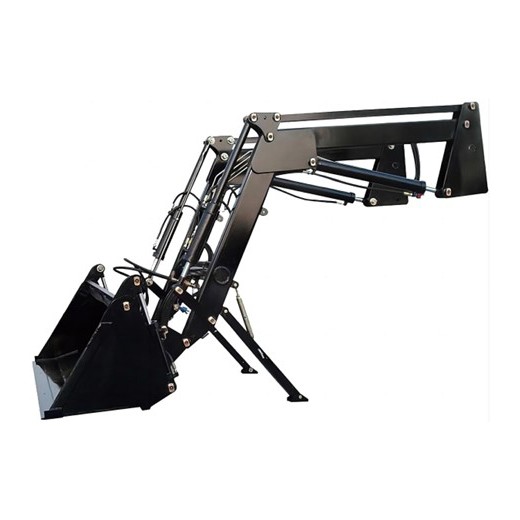
Some tillers can be fitted with Front End Loader. This is great for moving soil, gravel, or other materials around the farm. It can save you a lot of time and effort.
A Driven Harrow attachment can be used to level the soil after tilling. It helps to create a smooth surface for planting.
And if you need to dig trenches or do some light excavation work, a Backhoe attachment can come in very handy.
Budget
Last but not least, you've got to think about your budget. Rotary tillers can range in price from a few hundred dollars to several thousand dollars.
If you're on a tight budget, you might have to compromise a bit. You might not be able to get the most powerful or feature - packed tiller, but you can still find a decent one that meets your basic needs.
On the other hand, if you've got more money to spend, you can invest in a high - quality tiller that will last you a long time. A good tiller is an investment in your farm or garden, and it can save you a lot of time and hassle in the long run.
Conclusion
Choosing the right rotary tiller is all about understanding your needs and doing your research. By considering factors like the size of your land, the type of soil, the power source, the tiller width and depth, the tine design, and your budget, you can find a tiller that's perfect for you.
If you're still not sure which rotary tiller is right for you, don't hesitate to reach out. As a rotary tiller supplier, I've got the knowledge and experience to help you make the best decision. We can have a chat about your specific requirements and find the tiller that fits your needs and budget. Let's get your land in top - notch condition for planting!
References
- Agricultural Machinery Handbook
- Farm Equipment Magazine Articles


