

A driven harrow is a crucial piece of agricultural equipment that has a significant impact on soil health and productivity. As a supplier of high - quality driven harrows, I have seen firsthand how these machines can transform the way farmers manage their soil. But what exactly is the effect of a driven harrow on soil nutrient distribution? In this blog, we will explore the science behind it, and how it can benefit your farming operations.
Understanding Soil Nutrient Distribution
Before diving into the impact of a driven harrow, it's essential to understand the concept of soil nutrient distribution. Soil is a complex ecosystem that contains a wide range of nutrients, such as nitrogen, phosphorus, potassium, calcium, magnesium, and many trace elements. These nutrients are distributed unevenly throughout the soil profile, influenced by factors like soil type, organic matter content, previous crop rotations, and natural processes such as leaching and erosion.
Uneven nutrient distribution can lead to several problems in agriculture. For example, areas with low nutrient availability may result in poor crop growth and reduced yields, while areas with excessive nutrients can lead to environmental pollution, such as nutrient runoff into water bodies. Balancing and optimizing soil nutrient distribution is therefore crucial for sustainable and productive farming.
How a Driven Harrow Works
A driven harrow is a tillage implement that is powered by a tractor's power take - off (PTO). It typically consists of a series of rotating tines or discs that break up and mix the soil. Unlike traditional harrows that rely on the forward movement of the tractor to operate, the driven harrow actively agitates the soil, providing a more intensive and thorough tillage action.
When the driven harrow is in operation, the rotating tines or discs penetrate the soil, breaking up clods and loosening the soil structure. This process not only improves soil aeration and water infiltration but also has a profound effect on soil nutrient distribution.
The Effects on Soil Nutrient Distribution
Mixing of Nutrients
One of the primary effects of a driven harrow is the mixing of nutrients within the soil profile. As the tines or discs rotate, they bring nutrients from deeper soil layers to the surface and vice versa. This vertical mixing helps to distribute nutrients more evenly, ensuring that plants have access to a balanced supply of nutrients throughout the growing season.
For example, in many soils, nitrogen and phosphorus tend to accumulate near the surface due to fertilizer applications and organic matter decomposition. However, potassium and some trace elements may be more abundant in deeper soil layers. By using a driven harrow, farmers can mix these nutrients together, creating a more homogenous nutrient environment for plant roots.
Incorporation of Organic Matter
Another important aspect is the incorporation of organic matter into the soil. Organic matter, such as crop residues, manure, and compost, is a vital source of nutrients for plants. A driven harrow can effectively mix this organic matter into the soil, enhancing its decomposition and releasing nutrients slowly over time.

When the organic matter is mixed into the soil, soil microorganisms break it down, releasing nitrogen, phosphorus, and other nutrients. This not only provides a long - term supply of nutrients but also improves soil structure and water - holding capacity. The incorporation of organic matter also helps to buffer the soil against nutrient fluctuations, ensuring a more stable nutrient supply for plants.
Aeration and Nutrient Availability
The intensive tillage action of a driven harrow improves soil aeration. Oxygen is essential for many soil processes, including the activity of soil microorganisms and the availability of nutrients. When the soil is well - aerated, soil microorganisms can break down organic matter more efficiently, releasing nutrients in a plant - available form.
For example, in waterlogged or compacted soils, the lack of oxygen can lead to the accumulation of reduced forms of nutrients, such as iron and manganese, which can be toxic to plants in high concentrations. By aerating the soil, a driven harrow helps to prevent these problems and promotes the availability of nutrients in a non - toxic form.
Comparison with Other Agricultural Implements
To better understand the unique benefits of a driven harrow, it's useful to compare it with other common agricultural implements.
Backhoe
A Backhoe is mainly used for digging, trenching, and moving large amounts of soil. While it can certainly move soil and expose different soil layers, it is not designed for fine - scale mixing of soil nutrients. Backhoes are typically used for construction - related tasks in agriculture, such as building irrigation ditches or preparing foundations, rather than for soil nutrient management.
Suspension Disc Harrow
A Suspension Disc Harrow is a popular tillage implement that uses discs to break up and level the soil. It can provide some degree of soil mixing, but its action is more surface - oriented compared to a driven harrow. The discs of a suspension disc harrow mainly work on the top few inches of the soil, and may not be as effective in mixing nutrients from deeper soil layers.
Front End Loader
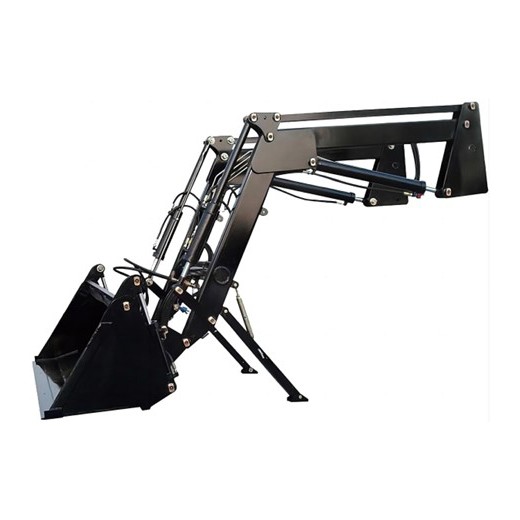
A Front End Loader is used for moving materials such as soil, manure, or hay. It is not a tillage implement and has no direct effect on soil nutrient distribution. Front end loaders are more focused on material handling tasks rather than soil management.
Benefits for Farming Operations
The improved soil nutrient distribution achieved by using a driven harrow offers several benefits for farming operations.
Increased Crop Yields
By providing a more balanced and accessible supply of nutrients, plants are more likely to grow vigorously and produce higher yields. When plants have access to all the essential nutrients they need, they can develop stronger roots, healthier foliage, and more abundant fruits or grains.
Reduced Fertilizer Use
With more even nutrient distribution, farmers may be able to reduce their fertilizer applications. Since nutrients are better mixed and available to plants, there is less need to apply excessive amounts of fertilizers to compensate for uneven nutrient distribution. This not only saves costs but also reduces the environmental impact of agriculture.
Improved Soil Health
The mixing of nutrients, incorporation of organic matter, and improved aeration all contribute to improved soil health. Healthy soil is more resilient to pests and diseases, has better water - holding capacity, and can support a diverse range of soil organisms. This, in turn, leads to more sustainable and productive farming in the long term.
Contact for Purchase and Consultation
If you are interested in learning more about how our driven harrows can improve soil nutrient distribution on your farm, or if you are considering purchasing a driven harrow for your agricultural operations, please feel free to contact us. Our team of experts is ready to provide you with detailed information, answer your questions, and help you choose the right equipment for your specific needs.
References
- Brady, N. C., & Weil, R. R. (2008). The Nature and Properties of Soils. Prentice Hall.
- Lal, R. (2004). Soil Management: Principles and Practices. CRC Press.
- Tisdall, J. M., & Oades, J. M. (1982). Organic matter and water - stable aggregates in soils. Journal of Soil Science, 33(2), 141 - 163.


