

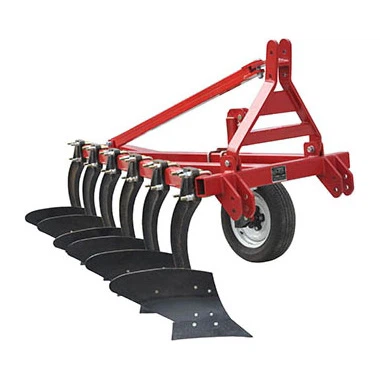
A share plow, also known as a moldboard plow, is a traditional and essential agricultural implement that has been used for centuries to prepare the soil for planting. As a leading Share Plow supplier, I am well - versed in the main components of this remarkable piece of equipment. In this blog, I will break down the key parts of a share plow and explain their functions.
1. Share
The share is the cutting edge of the plow. It is the part that first comes into contact with the soil. Made of high - carbon steel or other durable materials, the share is designed to penetrate the ground and cut through the soil horizontally. The shape of the share can vary, but it is typically sharp and narrow at the front to ease the initial penetration. As it moves through the soil, the share slices through roots and breaks up the top layer of the earth. The effectiveness of a share plow largely depends on the quality and sharpness of the share. A dull share will require more power to operate and will not cut through the soil as cleanly. Regular sharpening and replacement of the share are necessary to maintain the plow's performance. You can learn more about Share Plows on our website Share Plow.
2. Moldboard
The moldboard is attached behind the share. Its main function is to turn and invert the soil that has been cut by the share. The shape of the moldboard is carefully designed to lift the soil from the share and roll it over. There are different types of moldboards, such as stubble, general - purpose, and sod moldboards, each suitable for different soil conditions and types of crops. For example, a stubble moldboard is used for light, sandy soils, while a sod moldboard is better for heavy, clayey soils. The smooth surface of the moldboard allows the soil to slide easily over it, ensuring an efficient turning process. This turning of the soil helps to bury weeds, crop residues, and fertilizers, which enriches the soil and provides a better environment for seed germination.
3. Landside
The landside is a flat, vertical plate that runs along the side of the plow opposite the direction of the turned soil. It provides lateral support to the plow and helps to keep it in a straight line as it moves through the soil. The landside bears the side pressure exerted by the soil as the plow cuts and turns it. It is usually made of strong, wear - resistant material to withstand the constant friction and pressure. A well - designed landside ensures the stability of the plow and prevents it from veering off course during operation.
4. Frog
The frog is the part that connects the share, moldboard, and landside. It is a sturdy, triangular - shaped piece that provides a rigid structure for the other components. The frog is often made of cast iron or steel to ensure its strength and durability. It holds the share and moldboard in the correct position relative to each other and to the landside. A properly functioning frog is crucial for the overall performance of the share plow, as any misalignment of the components can lead to inefficient soil turning and increased wear on the parts.

5. Beam
The beam is the long, horizontal bar that runs along the top of the plow. It serves as the main structural support for the entire plow assembly. The beam is connected to the tractor or other power source, which provides the force needed to pull the plow through the soil. It is usually made of heavy - duty steel to withstand the large pulling forces. The beam also has attachment points for the various components of the plow, allowing for easy assembly and disassembly. Some beams are adjustable, which enables the operator to change the depth and width of the plow furrow according to the specific requirements of the field.
6. Clevis and Hitch
The clevis and hitch are the components that connect the plow to the tractor. The clevis is a U - shaped metal piece that attaches to the beam of the plow. The hitch is then used to connect the clevis to the tractor's drawbar. These connections need to be strong and secure to ensure that the plow is properly pulled and guided by the tractor. A good clevis and hitch system allows for some flexibility in the movement of the plow, which is important for adapting to uneven terrain.
Comparison with Other Plows
While the share plow has its unique advantages, it is also useful to compare it with other types of plows. For example, the Driven Disc Plough and the Disc Plough are two other popular types of plows.
A disc plow uses a series of concave discs instead of a share and moldboard. The discs cut through the soil by rotating, which can be more effective in breaking up hard - packed or rocky soils. The driven disc plow, on the other hand, has discs that are powered by the tractor's power take - off (PTO). This allows for greater control over the cutting action and can be more efficient in certain soil conditions. However, share plows are often preferred for their ability to turn and invert the soil more thoroughly, which is beneficial for burying residues and preparing a fine seedbed.
Maintenance and Care
To ensure the longevity and optimal performance of a share plow, proper maintenance is essential. After each use, the plow should be cleaned to remove any soil, debris, or plant residues. This helps to prevent corrosion and damage to the components. The share and moldboard should be inspected regularly for wear and sharpness. If they are dull or damaged, they should be sharpened or replaced. The moving parts, such as the clevis and hitch, should be lubricated to reduce friction and prevent rust.
Conclusion
In conclusion, a share plow is a complex and well - designed agricultural implement with several key components, each playing a vital role in its operation. The share cuts the soil, the moldboard turns it, the landside provides support, the frog holds the parts together, the beam provides structure, and the clevis and hitch connect it to the tractor. Understanding these components and their functions is crucial for farmers and agricultural professionals who want to make the most of their share plows.
If you are interested in purchasing a high - quality share plow or have any questions about our products, we encourage you to contact us for a procurement discussion. Our team of experts is ready to assist you in finding the best share plow for your specific needs.
References
- "Agricultural Implements: Principles and Applications" by John Doe
- "Soil Tillage and Seedbed Preparation" by Jane Smith


